

Does Wind Chill Affect Car Battery?
Tips & Support
- Sponsor
- OPTIMA Batteries
- Location
- Glendale, WI


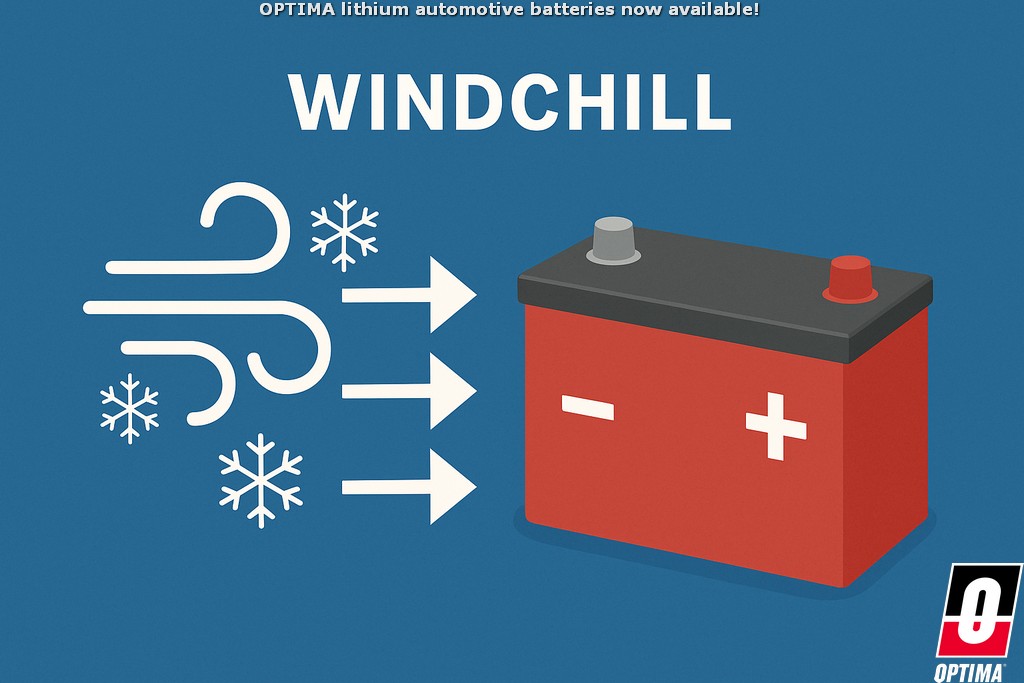
Does wind chill affect a car battery? To answer this question, we should first define wind chill and explain what it means. Wind chill is the sensation of cold produced by the wind for a given ambient air temperature on exposed skin as the air motion accelerates the rate of heat transfer from the body to the surrounding atmosphere. That definition seems to clearly focus on the sensation and specifically calls out exposed skin, neither of which are present with a car battery, but can blowing wind in cold weather impact car battery performance?
It's no secret car battery performance can be negatively impacted by both cold and hot extremes in terms of temperatures. We often say in the battery industry that extreme heat is what really hurts batteries and extreme cold is what brings out that damage. To the extent a battery might be exposed to wind in an extremely cold environment, that moving air could accelerate the transfer of heat from the battery to the atmosphere and help cool the battery faster. However, that battery temperature won't get any colder than the ambient air temperature, even if the wind chill (or wind chill factor) is ten or twenty degrees colder.
Most car batteries are mounted in somewhat or completely enclosed areas, whether that is under the hood of a vehicle (sometimes partially tucked underneath a firewall), in the trunk or the interior of the vehicle. Blowing wind in extremely cold temperatures may cool a car off faster in general after use, but once it reaches that ambient air temperature, the blowing wind won't continue to make the car or any of the components in it colder than the ambient air temperature. Most batteries are mounted well inside the vehicle, so blowing wind from the outside atmosphere is unlikely to have a significant impact on battery temperature or performance.
So while extremely cold temperatures, which often accompany cold wind chill factors, can negatively impact car battery performance, the wind chill factor itself is not likely to be a significant contributing factor. We can tell you that proper voltage maintenance will help maximize car battery performance and lifespan. If you make a habit of making many short trips, investing in a quality battery maintenance device and using it (or at least checking voltage) on a monthly basis can greatly improve battery performance and extend battery lifespan.
It's no secret car battery performance can be negatively impacted by both cold and hot extremes in terms of temperatures. We often say in the battery industry that extreme heat is what really hurts batteries and extreme cold is what brings out that damage. To the extent a battery might be exposed to wind in an extremely cold environment, that moving air could accelerate the transfer of heat from the battery to the atmosphere and help cool the battery faster. However, that battery temperature won't get any colder than the ambient air temperature, even if the wind chill (or wind chill factor) is ten or twenty degrees colder.
Most car batteries are mounted in somewhat or completely enclosed areas, whether that is under the hood of a vehicle (sometimes partially tucked underneath a firewall), in the trunk or the interior of the vehicle. Blowing wind in extremely cold temperatures may cool a car off faster in general after use, but once it reaches that ambient air temperature, the blowing wind won't continue to make the car or any of the components in it colder than the ambient air temperature. Most batteries are mounted well inside the vehicle, so blowing wind from the outside atmosphere is unlikely to have a significant impact on battery temperature or performance.
So while extremely cold temperatures, which often accompany cold wind chill factors, can negatively impact car battery performance, the wind chill factor itself is not likely to be a significant contributing factor. We can tell you that proper voltage maintenance will help maximize car battery performance and lifespan. If you make a habit of making many short trips, investing in a quality battery maintenance device and using it (or at least checking voltage) on a monthly basis can greatly improve battery performance and extend battery lifespan.