
Great Loop Chronicles Part Six
Marine
- Sponsor
- OPTIMA Batteries
- Location
- Vonore, Tennessee


The Great Loop Chronicles will be an ongoing series, following the travels of OPTIMA Batteries staffer, Jim McIlvaine, as he travels America's Great Loop, a 6000+ nautical mile journey around the Eastern United States.
Two weeks removed from my training with Captain Chris Caldwell and about a month before we plan to leave, I'm finally going to lay eyes on my new boat. My plan was to drive up a truckload of stuff to the boat in Eastern Tennessee, from our home in Florida. It turned out to be more stuff than I was expecting and I ended up having to rent a one-way U-haul. While up there, I would also get training on the boat from another captain, Captain Thomas (thankfully, no Captain Ron sightings), who would continue my instruction on basic boat operation and maintenance.
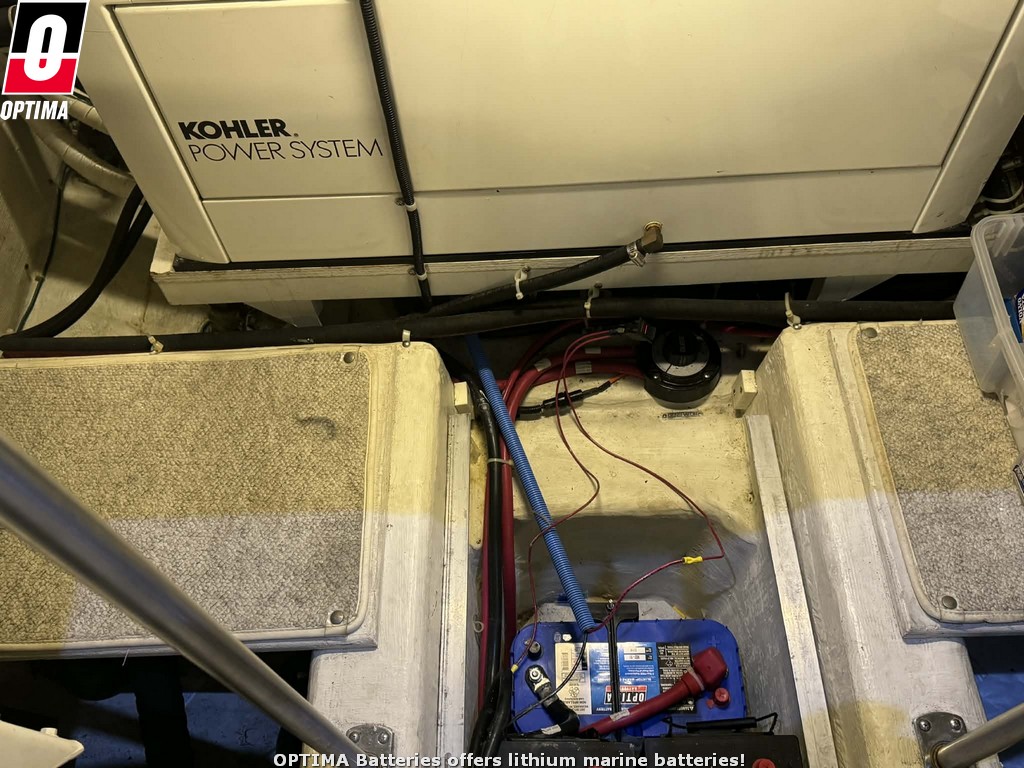
One of the things uncovered by the survey was a bad battery on the Kohler generator. Thankfully, I know a guy and the first thing that was changed was a Group 31 OPTIMA BLUETOP. Captain Thomas also showed me how to clean the strainers (and close the seacock before doing that). There was a fairly long list of other maintenance items noted by the survey and while I was able to tackle a few things, I relied heavily on a local mechanic to do the bulk of the work, after I returned to Florida from my training with Captain Thomas. Stuff adds up, but more than $7,000 later, I felt like the boat was in good enough shape to at least start off the trip with my family from Eastern Tennessee. However, we did plan to stop at Safe Harbor Aqua Yacht, once we reached Iuka, Mississippi, to have the prop shaft seals and cutlass bearings replaced before our journey.
When it came time to train on the operation of the boat, I have to admit, just the thought of moving around a 46-foot vessel is pretty daunting. Even if I had no prior boating experience, I've watched enough Qualified Captain videos to know there are endless ways to get in trouble when operating a boat. Would two days on the water be enough to get me prepared? I was about to find out.
As it turns out, low speed operation is very similar to running a zero-turn lawnmower, where you control movement of the boat primarily through the port and starboard throttles, with an occasional assist from the bow thruster. It's a much bigger mower, but the basic concepts translate fairly well and low speed operation at least makes sense, even if I'm still nervous when doing it.
The Great Loop route involves going through more than 100 locks, so we made a run down to the nearest lock to practice procedure. Commercial traffic always gets priority, but luckily, there was no such traffic when we approached the lock. The chamber was filled and I learned how to approach the floating bollard, where we'd loop a line around to secure the boat and make sure all the bumpers were positioned properly with the points of contact on the boat. Once we made it to the bottom, we went back in and locked back up.
While it is nerve-wracking to direct your boat next to a concrete wall in sometimes windy conditions, it wasn't as daunting a task as I was expecting...at least with a trained captain guiding me in. Would it be different with my wife? She was confident it would be just like backing up a horse trailer. I keep telling myself less physically capable couples in their late-60s and early-70s do this stuff every year, some in larger boats than this one. One highly recommended component for the Great Loop is a set of wireless headsets, that allows the captain to communicate with the crew that was trying to put a line around the bollard or grab a cleat at the dock. The Carver 466 has no lower helm and visibility from the upper helm doesn't start until about eight feet beyond the boat in any direction. The last thing you want to do is have the captain and crew screaming to communicate during locking or docking (or at any other point in time).
The second day we practiced anchoring, which seems fairly straightforward, but also seems to have some finesse involved in it. Our boat has 250 feet of anchor chain (which is attached at the bitter end) and apparently, the anchor chain does a lot to hold the boat in place and you want a multiple of feet of chain released, based on the depth where you are anchoring. Our chain was painted at one point, to indicate 50-foot lengths of chain, but red is the only identifiable color at this point.
I do have my eyes on some colored anchor chain inserts, but I'm not sure of the diameter of my chain, so I haven't bought those yet. We practiced anchoring in a muddy bottom and while we thought we had the anchor secured, after sitting for a few minutes, we found the wind dragged the anchor a bit, so we set it again, which resulted in a good anchorage. That's easy enough to do with a trained captain in open water with plenty of space around, but how would this training translate to a smaller cove or tributary?
Back at the marina, the previous owner spent a couple hours walking me through the boat, which was immensely helpful. He gave me his cell phone too, so I expect I'll be calling him quite a bit going forward. My broker also connected me with the McGill family, who has the same boat and is a little further along on the Loop. I've been blowing up Bryan's phone pretty regularly since we moved forward with our Carver.
At this point, I'm as trained as I'm going to be. I'm headed back to Florida and scheduled to work Round One of OPTIMA's Ultimate Street Car Series at G2 Motorsports Park in Anna, Texas in mid-March. I'll head to the boat from Texas and my wife and kids will fly up separately and meet me there. Click here for part seven!
Two weeks removed from my training with Captain Chris Caldwell and about a month before we plan to leave, I'm finally going to lay eyes on my new boat. My plan was to drive up a truckload of stuff to the boat in Eastern Tennessee, from our home in Florida. It turned out to be more stuff than I was expecting and I ended up having to rent a one-way U-haul. While up there, I would also get training on the boat from another captain, Captain Thomas (thankfully, no Captain Ron sightings), who would continue my instruction on basic boat operation and maintenance.
One of the things uncovered by the survey was a bad battery on the Kohler generator. Thankfully, I know a guy and the first thing that was changed was a Group 31 OPTIMA BLUETOP. Captain Thomas also showed me how to clean the strainers (and close the seacock before doing that). There was a fairly long list of other maintenance items noted by the survey and while I was able to tackle a few things, I relied heavily on a local mechanic to do the bulk of the work, after I returned to Florida from my training with Captain Thomas. Stuff adds up, but more than $7,000 later, I felt like the boat was in good enough shape to at least start off the trip with my family from Eastern Tennessee. However, we did plan to stop at Safe Harbor Aqua Yacht, once we reached Iuka, Mississippi, to have the prop shaft seals and cutlass bearings replaced before our journey.
When it came time to train on the operation of the boat, I have to admit, just the thought of moving around a 46-foot vessel is pretty daunting. Even if I had no prior boating experience, I've watched enough Qualified Captain videos to know there are endless ways to get in trouble when operating a boat. Would two days on the water be enough to get me prepared? I was about to find out.
As it turns out, low speed operation is very similar to running a zero-turn lawnmower, where you control movement of the boat primarily through the port and starboard throttles, with an occasional assist from the bow thruster. It's a much bigger mower, but the basic concepts translate fairly well and low speed operation at least makes sense, even if I'm still nervous when doing it.
The Great Loop route involves going through more than 100 locks, so we made a run down to the nearest lock to practice procedure. Commercial traffic always gets priority, but luckily, there was no such traffic when we approached the lock. The chamber was filled and I learned how to approach the floating bollard, where we'd loop a line around to secure the boat and make sure all the bumpers were positioned properly with the points of contact on the boat. Once we made it to the bottom, we went back in and locked back up.
While it is nerve-wracking to direct your boat next to a concrete wall in sometimes windy conditions, it wasn't as daunting a task as I was expecting...at least with a trained captain guiding me in. Would it be different with my wife? She was confident it would be just like backing up a horse trailer. I keep telling myself less physically capable couples in their late-60s and early-70s do this stuff every year, some in larger boats than this one. One highly recommended component for the Great Loop is a set of wireless headsets, that allows the captain to communicate with the crew that was trying to put a line around the bollard or grab a cleat at the dock. The Carver 466 has no lower helm and visibility from the upper helm doesn't start until about eight feet beyond the boat in any direction. The last thing you want to do is have the captain and crew screaming to communicate during locking or docking (or at any other point in time).
The second day we practiced anchoring, which seems fairly straightforward, but also seems to have some finesse involved in it. Our boat has 250 feet of anchor chain (which is attached at the bitter end) and apparently, the anchor chain does a lot to hold the boat in place and you want a multiple of feet of chain released, based on the depth where you are anchoring. Our chain was painted at one point, to indicate 50-foot lengths of chain, but red is the only identifiable color at this point.
I do have my eyes on some colored anchor chain inserts, but I'm not sure of the diameter of my chain, so I haven't bought those yet. We practiced anchoring in a muddy bottom and while we thought we had the anchor secured, after sitting for a few minutes, we found the wind dragged the anchor a bit, so we set it again, which resulted in a good anchorage. That's easy enough to do with a trained captain in open water with plenty of space around, but how would this training translate to a smaller cove or tributary?
Back at the marina, the previous owner spent a couple hours walking me through the boat, which was immensely helpful. He gave me his cell phone too, so I expect I'll be calling him quite a bit going forward. My broker also connected me with the McGill family, who has the same boat and is a little further along on the Loop. I've been blowing up Bryan's phone pretty regularly since we moved forward with our Carver.
At this point, I'm as trained as I'm going to be. I'm headed back to Florida and scheduled to work Round One of OPTIMA's Ultimate Street Car Series at G2 Motorsports Park in Anna, Texas in mid-March. I'll head to the boat from Texas and my wife and kids will fly up separately and meet me there. Click here for part seven!