

Why Does My Car Need a Jump Start When the Battery Tests Good?
Tips & Support
- Sponsor
- OPTIMA Batteries
- Location
- Glendale, WI


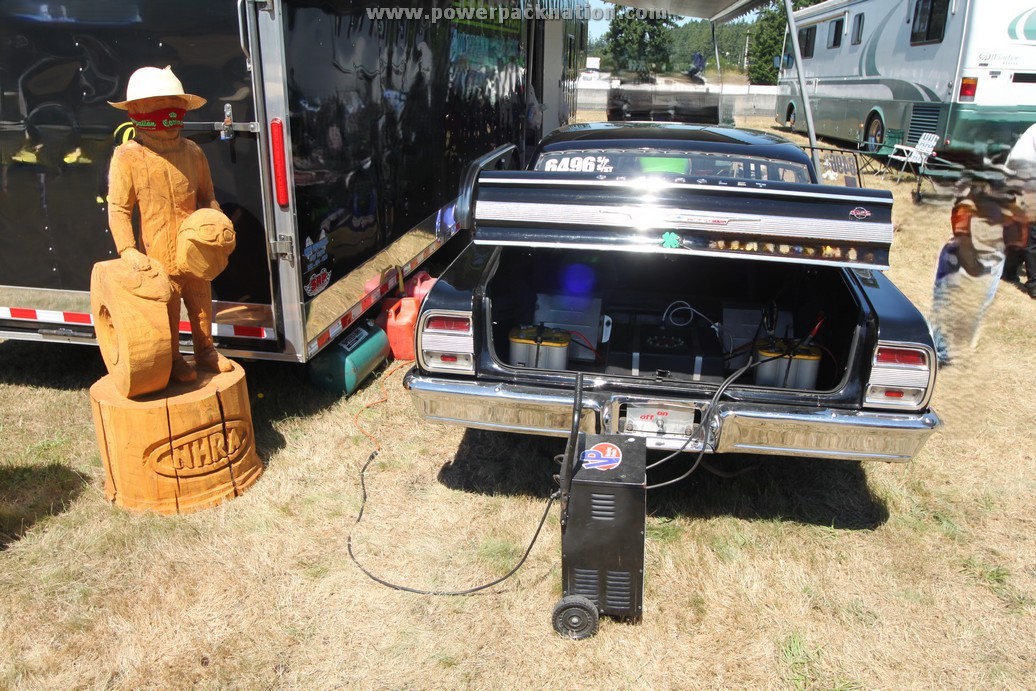
When we see a car like this Chevy Nova with dual OPTIMA YELLOWTOPs in the back connected to a battery charger at the dragstrip, we typically know what's going on. The car probably runs two batteries because it needs a lot of cranking power to get the engine started, it may be running underdrive pulleys, if it's running a charging system at all and it may be running electric fans in between runs to cool the car down. That all makes sense to us, but what doesn't make sense to some people is when they are having trouble with their car battery, they have it load tested and it tests good, but they still end up needing to get their car jump started. Why is that happening? We'll offer some insight.
Parasitic Draws
The most common reason people need to jump start their car is because something discharged their battery. Leaving headlights on is easy to diagnose, but there are other parasitic draws that are not as easy to pick up on. However, if your vehicle only sees periodic use or you are encountering issues after it has been sitting in storage over the winter or even in the airport parking lot while you were on a trip, there could be a parasitic draw that is slowly discharging your battery.
You may not notice the effects of a parasitic draw when you drive your vehicle on a regular basis, because the vehicle's charging system can often replace the energy consumed by a parasitic draw as the vehicle sat. However, newer vehicles are so demanding from an electrical standpoint, especially when the engine isn't running, that we recommend charging your battery with a quality battery charger every month, just to make sure the battery voltage is being properly maintained to at least 12.6 volts.
Vehicle charging systems can only do so much, as they are designed to maintain batteries near a full state of charge, not recharge deeply discharged batteries. As a result, if you need to jump start your vehicle, find a quality battery charger as soon as possible and make sure your battery is fully recharged, so you don't overwork your charging system. Short drives often do not allow a vehicle's charging system to replace the energy that was used during storage and starting, so if your daily commute is under ten minutes, it's especially important that you make sure you stay on top of your battery voltage.
When you charge your battery every month, you should note the voltage. If it is consistently below 12.6 volts (be sure to check voltage after the vehicle sat overnight and not when you just finished driving it, when it might have a surface charge), you may need to increase the cadence on your monthly battery charging. If you find it consistently shows good voltage, you may be able to expand that window by another week or two, but set a reminder on your phone, just like you would to replace your furnace filter. If your charger doesn't measure voltage like the OPTIMA D400+ or D1200+, you can pick up a voltmeter or multimeter at your local auto parts store or online retailers for as little as $10.
Why Does My Battery Load Test Good?
Whenever a proper load test is performed on a battery, the technician testing the battery first attempts to fully charge the battery with a battery charger. That means even if the battery is deeply discharged and needed a jump start, it will likely get fully recharged before it is load tested. Discharged batteries will not show accurate results in a load test and some load testing devices even instruct the technician to fully charge the battery to at least 12.6 volts, if it senses low voltage. That's why some retailers will tell customers they need to keep their battery all day or overnight before administering a load test.
Easy to Use
Most quality battery retailers will offer free load testing on your battery, but if even the voltmeters and battery chargers sound too technical for you to understand or use, don't worry, you've got this! OPTIMA's battery chargers and maintainers are easy to use with push button functionality and easy to read displays that will illuminate green when your battery is fully charged. The black clamp goes on the negative (ground) and the red clamp goes on the positive (+) terminal, but even if you get confused and mix them up, our intelligent units with no-spark connectivity will alert you to a connection issue.
If you've read this far, you are probably realizing how important it is to keep your battery properly charged whenever possible. We believe this is so critical to not only battery performance, but battery lifespan, that we will extend the free replacement warranty on your OPTIMA battery by a full year, if you buy an OPTIMA D1200+ battery charger from us, when you purchase your OPTIMA battery.
Parasitic Draws
The most common reason people need to jump start their car is because something discharged their battery. Leaving headlights on is easy to diagnose, but there are other parasitic draws that are not as easy to pick up on. However, if your vehicle only sees periodic use or you are encountering issues after it has been sitting in storage over the winter or even in the airport parking lot while you were on a trip, there could be a parasitic draw that is slowly discharging your battery.
You may not notice the effects of a parasitic draw when you drive your vehicle on a regular basis, because the vehicle's charging system can often replace the energy consumed by a parasitic draw as the vehicle sat. However, newer vehicles are so demanding from an electrical standpoint, especially when the engine isn't running, that we recommend charging your battery with a quality battery charger every month, just to make sure the battery voltage is being properly maintained to at least 12.6 volts.
Vehicle charging systems can only do so much, as they are designed to maintain batteries near a full state of charge, not recharge deeply discharged batteries. As a result, if you need to jump start your vehicle, find a quality battery charger as soon as possible and make sure your battery is fully recharged, so you don't overwork your charging system. Short drives often do not allow a vehicle's charging system to replace the energy that was used during storage and starting, so if your daily commute is under ten minutes, it's especially important that you make sure you stay on top of your battery voltage.
When you charge your battery every month, you should note the voltage. If it is consistently below 12.6 volts (be sure to check voltage after the vehicle sat overnight and not when you just finished driving it, when it might have a surface charge), you may need to increase the cadence on your monthly battery charging. If you find it consistently shows good voltage, you may be able to expand that window by another week or two, but set a reminder on your phone, just like you would to replace your furnace filter. If your charger doesn't measure voltage like the OPTIMA D400+ or D1200+, you can pick up a voltmeter or multimeter at your local auto parts store or online retailers for as little as $10.
Why Does My Battery Load Test Good?
Whenever a proper load test is performed on a battery, the technician testing the battery first attempts to fully charge the battery with a battery charger. That means even if the battery is deeply discharged and needed a jump start, it will likely get fully recharged before it is load tested. Discharged batteries will not show accurate results in a load test and some load testing devices even instruct the technician to fully charge the battery to at least 12.6 volts, if it senses low voltage. That's why some retailers will tell customers they need to keep their battery all day or overnight before administering a load test.
Easy to Use
Most quality battery retailers will offer free load testing on your battery, but if even the voltmeters and battery chargers sound too technical for you to understand or use, don't worry, you've got this! OPTIMA's battery chargers and maintainers are easy to use with push button functionality and easy to read displays that will illuminate green when your battery is fully charged. The black clamp goes on the negative (ground) and the red clamp goes on the positive (+) terminal, but even if you get confused and mix them up, our intelligent units with no-spark connectivity will alert you to a connection issue.
If you've read this far, you are probably realizing how important it is to keep your battery properly charged whenever possible. We believe this is so critical to not only battery performance, but battery lifespan, that we will extend the free replacement warranty on your OPTIMA battery by a full year, if you buy an OPTIMA D1200+ battery charger from us, when you purchase your OPTIMA battery.