What is the Best Battery for a Kayak Trolling Motor?
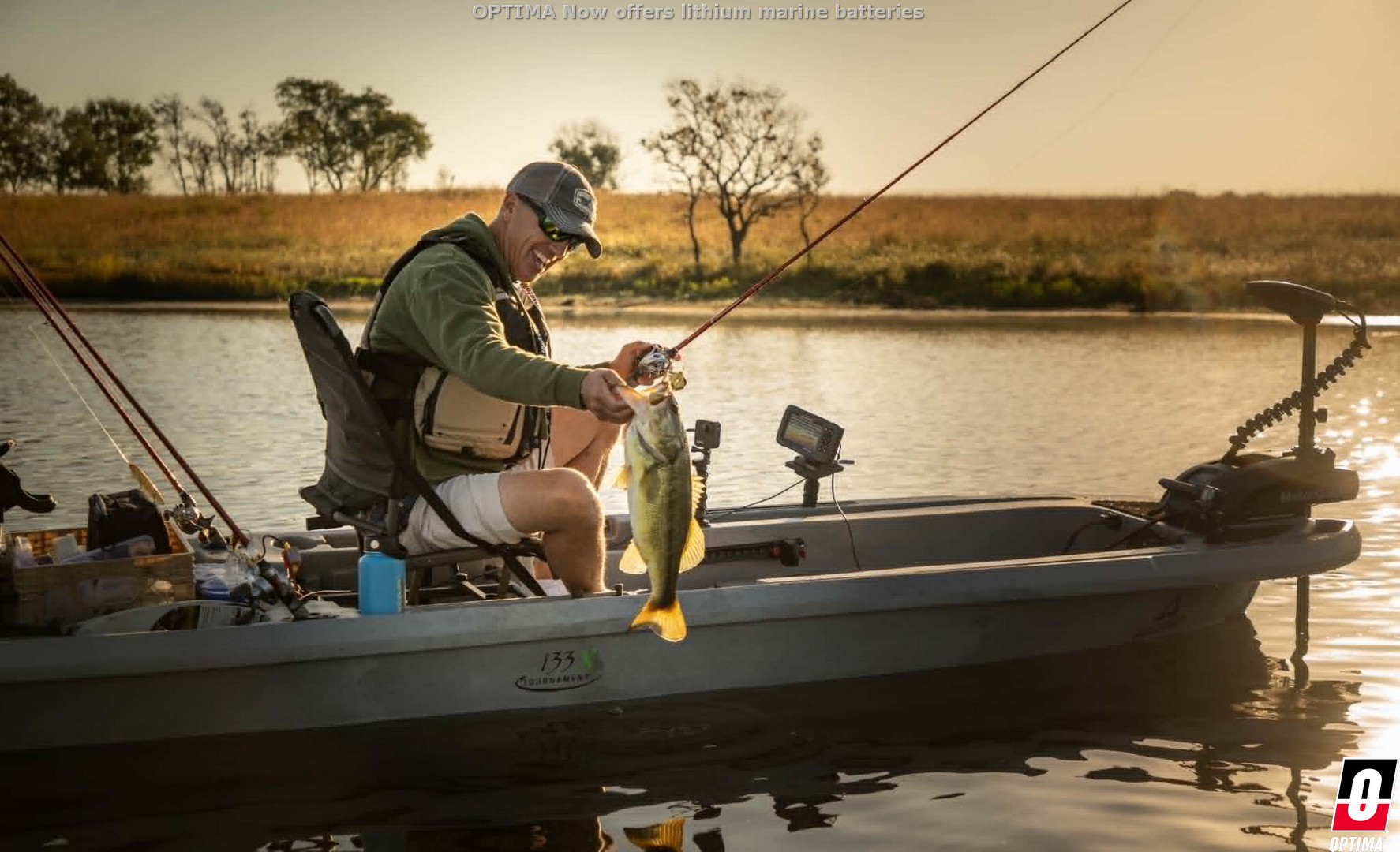
When it comes to boat batteries, the priorities when shopping for a kayak trolling motor battery can be very different than batteries used in other types of boating. You'd have a hard time finding any boat that has a lower freeboard than a kayak, which means you're far more likely to get water in the boat. For that reason, we'd avoid any battery that cannot get wet.
WATERPROOF?
We routinely display OPTIMA BLUETOP AGM batteries at trade shows and fishing tournaments, sitting in the bottom of a filled aquarium, running an air pump off the fully submerged battery to demonstrate their ability to work in wet conditions. However, we understand the weight of an AGM battery can sometimes make lead-acid batteries a less desirable choice for kayaks. Some kayak anglers would prefer to use lithium batteries with their trolling motors. They should make sure any lithium battery they are considering for a kayak has a water and dust rating of IP67 or better.
We've interviewed dozens of tournament anglers who use lithium batteries in bass boats that would at least in theory, provide a drier environment than a kayak. The most common failure mode they reported was water intrusion into the case. While some batteries being marketed for marine use have IP65 protection, that only protects against low pressure water jets, not submersion. Some other "marine" batteries may not have any protection against water intrusion, while an IP67 rating (standard on all OPTIMA ORANGETOP lithium batteries) can protect a battery totally submerged in up to a meter of water for 30 minutes.
SIZE/WEIGHT
In lead-acid batteries, you'll find flooded lead-acid batteries will typically weigh slightly less than AGM batteries of the same size. However, one of the strongest selling points of lithium batteries is their light weight relative to lead-acid options. OPTIMA's D34M BLUETOP is the smallest of our three AGM batteries and weighs 43 pounds. The largest battery we offer is a Group 31 (our D27M BLUETOP is in between the two) and our Q31M-DC150 ORANGETOP lithium battery weighs only 38 pounds.
While less weight in a physically larger battery (and a whole lot more energy) is great, some kayak anglers may find a Group 31 battery is just too large for their boat. We only offer lithium marine batteries in a Group 31 size at the moment, so if you're set on lithium and a 31 is too big, just keep in mind what we called out earlier about IP67 ratings and pay attention to what we're covering next!
POWER/CAPACITY
We use the word "quality" a lot when we talk about lithium batteries, because there are such vast differences in lithium battery quality, including the quality of the cells being used and the Battery Management System (BMS) that manages current flow. Lithium battery manufacturers took notes when they watched lead-acid battery customers gravitate toward batteries with high Cold Cranking Amps. As a result, 100AH Group 31 batteries became the benchmark for lithium marine battery brands. (OPTIMA's ORANGETOP marine batteries come in 120AH or 150AH varieties) and who can offer 100AH at the lowest price.
Little thought or concern was given by some of those lithium brands as to the BMS controlling the current flow in those batteries, relative to how they might be used. A 55-lb trolling motor can draw close to 50A at full power, so if the BMS discharge rate on a 100AH lithium battery tops out at 30A, the battery could shut down quickly, even if it has plenty of stored energy to deliver. OPTIMA's ORANGETOP marine batteries can deliver either 150A or 200A of continuous current, so they both have you safely covered in that regard.
Lead-acid batteries tend to have far less capacity in the same sizes as their lithium counterparts and are less efficient at delivering that power, although AGM batteries tend to be superior to flooded lead-acid batteries in both regards. A D31M BLUETOP AGM battery offers 75AH of capacity, which is half the rating of our Q31M-DC150 ORANGETOP lithium battery. The ORANGETOP will not only deliver more of its rated capacity, it will also accept a charge far more efficiently and offer far superior cycle life.
WHAT ABOUT PRICE?
From the least expensive to most expensive options, you're typically looking at flooded lead-acid, AGM lead-acid and lithium. We know there are exceptions, particularly with lithium, but we'd again call out the "quality" differentiator. We're also starting to see some lithium marine brands go out of business (which we've seen before with lithium automotive and motorcycle brands). We can help you sort through the mess of it all and find a battery brand you can trust, even if OPTIMA doesn't offer the battery you need.
Realistically, if you picked up a kayak at a yard sale for a couple hundred bucks, a flooded lead-acid battery on a cheap trolling motor will get you out on the water. It may not keep you out there the longest, but it might not make sense to spend more on a lithium battery than you did on your kayak. An AGM battery could be the sweet spot for you, if you want more capacity, longer life and better vibration resistance (think about a trailer bouncing around on the road). If you want the best battery possible with the most power on tap, the lightest weight and you'll really take advantage of thousands of cycles versus hundreds for an AGM battery, then an appropriately sized lithium battery will be the best choice for you. Good luck and tight lines!
WATERPROOF?
We routinely display OPTIMA BLUETOP AGM batteries at trade shows and fishing tournaments, sitting in the bottom of a filled aquarium, running an air pump off the fully submerged battery to demonstrate their ability to work in wet conditions. However, we understand the weight of an AGM battery can sometimes make lead-acid batteries a less desirable choice for kayaks. Some kayak anglers would prefer to use lithium batteries with their trolling motors. They should make sure any lithium battery they are considering for a kayak has a water and dust rating of IP67 or better.
We've interviewed dozens of tournament anglers who use lithium batteries in bass boats that would at least in theory, provide a drier environment than a kayak. The most common failure mode they reported was water intrusion into the case. While some batteries being marketed for marine use have IP65 protection, that only protects against low pressure water jets, not submersion. Some other "marine" batteries may not have any protection against water intrusion, while an IP67 rating (standard on all OPTIMA ORANGETOP lithium batteries) can protect a battery totally submerged in up to a meter of water for 30 minutes.
SIZE/WEIGHT
In lead-acid batteries, you'll find flooded lead-acid batteries will typically weigh slightly less than AGM batteries of the same size. However, one of the strongest selling points of lithium batteries is their light weight relative to lead-acid options. OPTIMA's D34M BLUETOP is the smallest of our three AGM batteries and weighs 43 pounds. The largest battery we offer is a Group 31 (our D27M BLUETOP is in between the two) and our Q31M-DC150 ORANGETOP lithium battery weighs only 38 pounds.
While less weight in a physically larger battery (and a whole lot more energy) is great, some kayak anglers may find a Group 31 battery is just too large for their boat. We only offer lithium marine batteries in a Group 31 size at the moment, so if you're set on lithium and a 31 is too big, just keep in mind what we called out earlier about IP67 ratings and pay attention to what we're covering next!
POWER/CAPACITY
We use the word "quality" a lot when we talk about lithium batteries, because there are such vast differences in lithium battery quality, including the quality of the cells being used and the Battery Management System (BMS) that manages current flow. Lithium battery manufacturers took notes when they watched lead-acid battery customers gravitate toward batteries with high Cold Cranking Amps. As a result, 100AH Group 31 batteries became the benchmark for lithium marine battery brands. (OPTIMA's ORANGETOP marine batteries come in 120AH or 150AH varieties) and who can offer 100AH at the lowest price.
Little thought or concern was given by some of those lithium brands as to the BMS controlling the current flow in those batteries, relative to how they might be used. A 55-lb trolling motor can draw close to 50A at full power, so if the BMS discharge rate on a 100AH lithium battery tops out at 30A, the battery could shut down quickly, even if it has plenty of stored energy to deliver. OPTIMA's ORANGETOP marine batteries can deliver either 150A or 200A of continuous current, so they both have you safely covered in that regard.
Lead-acid batteries tend to have far less capacity in the same sizes as their lithium counterparts and are less efficient at delivering that power, although AGM batteries tend to be superior to flooded lead-acid batteries in both regards. A D31M BLUETOP AGM battery offers 75AH of capacity, which is half the rating of our Q31M-DC150 ORANGETOP lithium battery. The ORANGETOP will not only deliver more of its rated capacity, it will also accept a charge far more efficiently and offer far superior cycle life.
WHAT ABOUT PRICE?
From the least expensive to most expensive options, you're typically looking at flooded lead-acid, AGM lead-acid and lithium. We know there are exceptions, particularly with lithium, but we'd again call out the "quality" differentiator. We're also starting to see some lithium marine brands go out of business (which we've seen before with lithium automotive and motorcycle brands). We can help you sort through the mess of it all and find a battery brand you can trust, even if OPTIMA doesn't offer the battery you need.
Realistically, if you picked up a kayak at a yard sale for a couple hundred bucks, a flooded lead-acid battery on a cheap trolling motor will get you out on the water. It may not keep you out there the longest, but it might not make sense to spend more on a lithium battery than you did on your kayak. An AGM battery could be the sweet spot for you, if you want more capacity, longer life and better vibration resistance (think about a trailer bouncing around on the road). If you want the best battery possible with the most power on tap, the lightest weight and you'll really take advantage of thousands of cycles versus hundreds for an AGM battery, then an appropriately sized lithium battery will be the best choice for you. Good luck and tight lines!